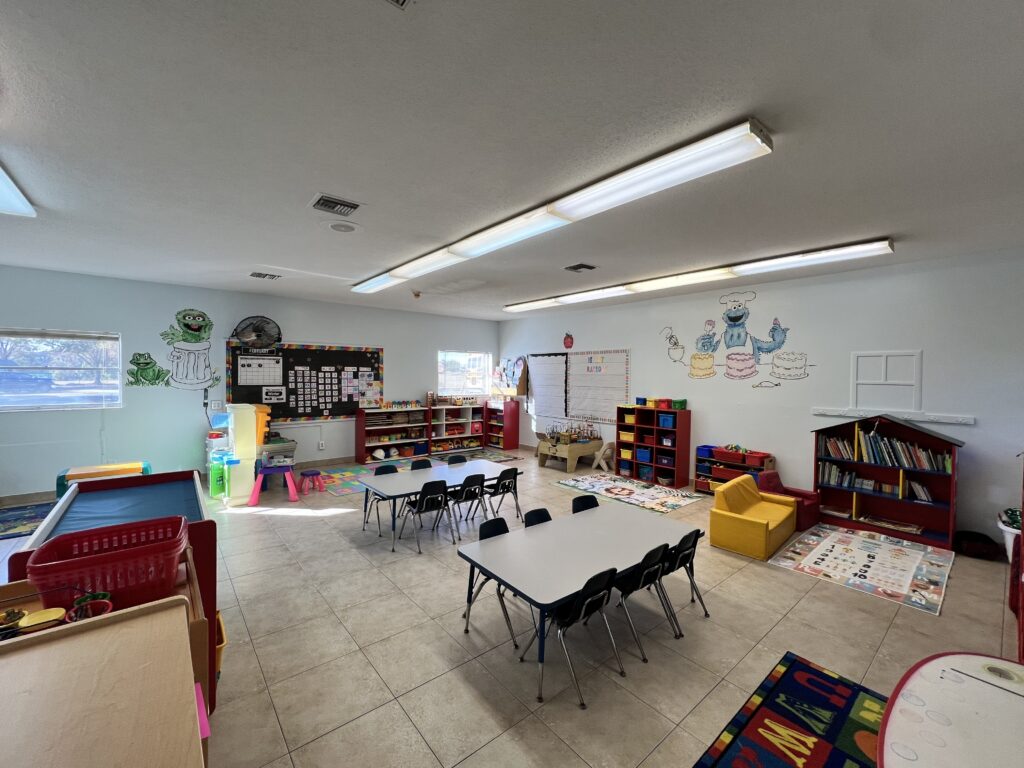
2 YEAR OLD CLASSROOM (Click for Info and Classroom Goals)
About the Classroom
The classroom is designed for children around age two to explore and manipulate their environment while building early social, language, and motor skills.
Teachers provide hands-on materials and guided activities to foster relationships, learning, and growth in a warm, nurturing environment.
Developmental Goals & Objectives
Social / Emotional Development
- Learns classroom routines
- Trusts known adults
- Expresses emotions
- Manages feelings
- Begins cooperative play
- Learns empathy
- Develops group participation
- Uses personal care skills
Physical Development
Gross Motor
- Walks up/down stairs
- Runs
- Jumps from step
- Climbs
Fine Motor
- Scribbles with crayons
- Uses scissors (intro level)
- Holds cups
- Places small items
Cognitive Development
- Learns object use
- Understands cause/effect
- Sorts/groups items
- Beginning problem solving
- Engages in pretend play
Language Development
Experiments with drawing/writing
Develops receptive language
Develops expressive language
Uses words to communicate
Follows simple directions
Participates in conversations
Recognizes pictures/print
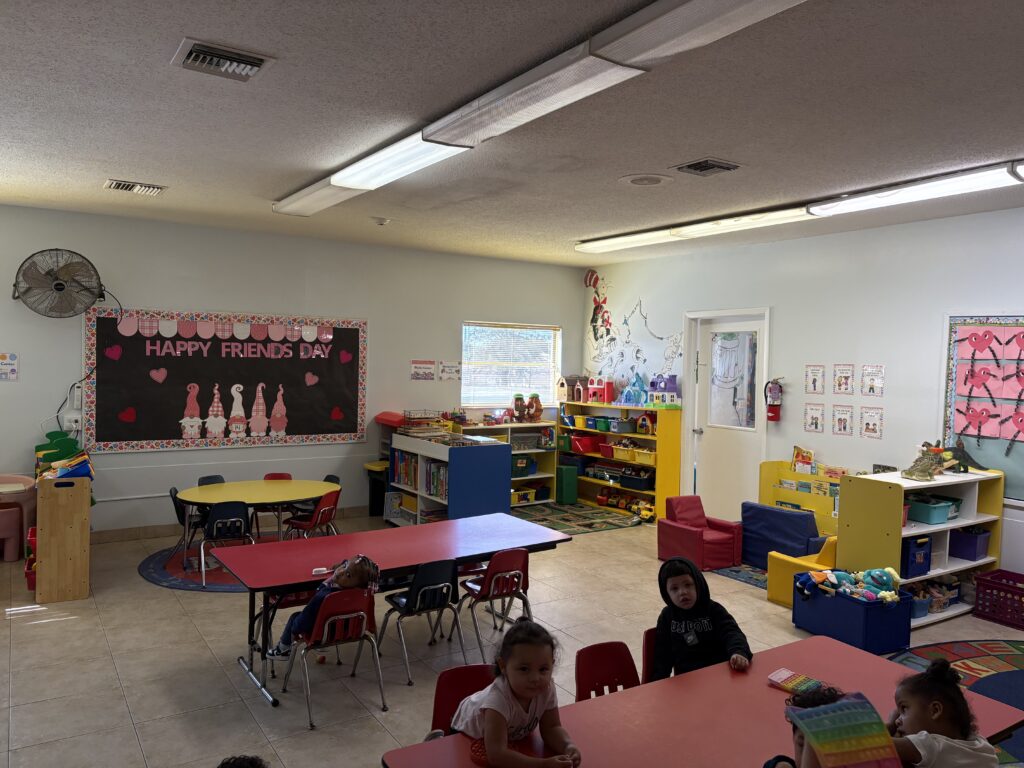
3 YEAR OLD CLASSROOM (Click for Info and Classroom Goals)
Ages: 36–48 Months
About the Classroom
The 3-year-old classroom prepares children for Pre-Kindergarten. It introduces pre-reading and early math concepts, encourages cooperative play, and supports language development.
Routines and rules help children build confidence and independence. Teachers create group and individual activities using the Creative Curriculum to strengthen fine/gross motor skills and emerging language abilities. Instruction is individualized through child-specific goal plans based on parent input and teacher observation.
Developmental Goals & Objectives
Social / Emotional Development
Sense of Self
- Adjusts to new situations
- Shows trust in adults
- Recognizes feelings
- Manages emotions
- Stands up for rights
Responsibility for Self & Others
- Demonstrates independence
- Takes responsibility
- Respects classroom environment
- Follows routines
- Follows rules
Prosocial Behavior
- Plays well with others
- Recognizes others’ feelings
- Shares and respects rights
- Resolves conflicts using thinking skills
Physical Development
Gross Motor
- Runs, jumps, hops, gallops
- Balances while moving
- Pedals tricycle
- Demonstrates throwing/kicking/catching
Fine Motor
- Controls hand muscles
- Coordinates eye-hand movement
- Uses writing/drawing tools
Cognitive Development
Learning & Problem Solving
- Observes objects/events
- Approaches problems flexibly
- Shows persistence
- Explores cause/effect
- Applies knowledge
Logical Thinking
- Classifies objects
- Compares/measures
- Arranges in series
- Recognizes patterns
- Understands time
- Understands spatial position
- One-to-one correspondence
- Uses numbers/counting
Representation & Symbolic Thinking
- Pretend play
- Make-believe with objects
- Creates representations
Language Development
Listening & Speaking
- Hears/discriminates sounds
- Uses words and sentences
- Follows directions
- Answers questions
- Asks questions
- Participates in conversations
Reading & Writing
Writes letters/words with help
Enjoys reading
Understands print concepts
Knows alphabet basics
Uses early reading skills
Comprehends stories
Understands writing purpose
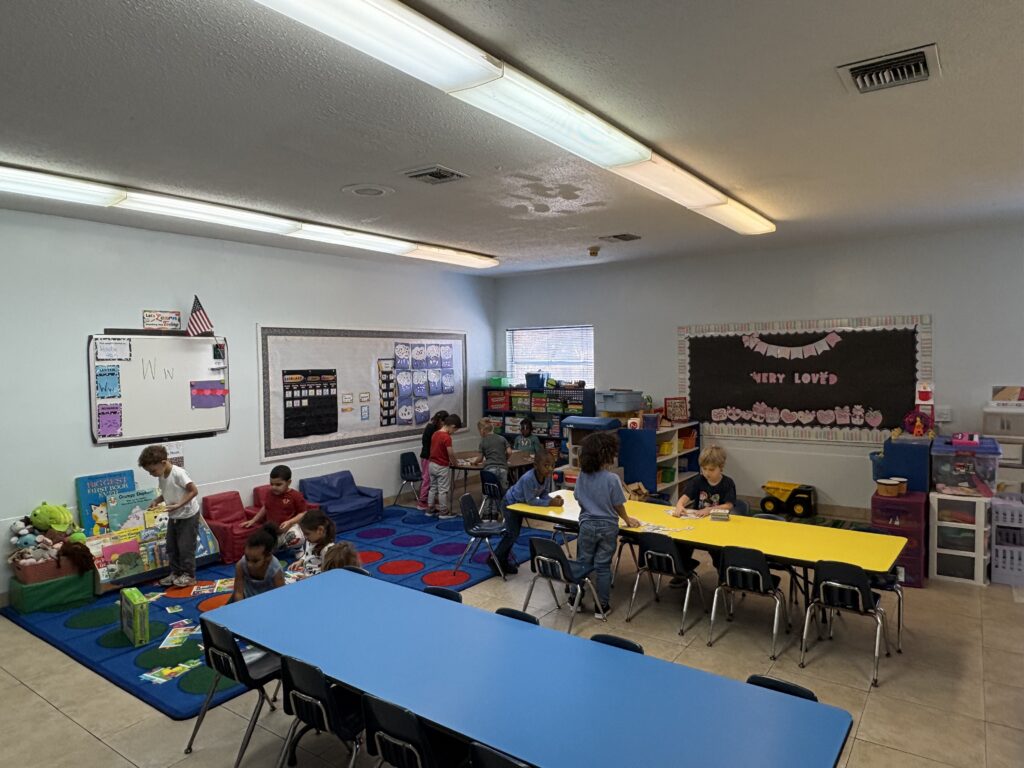
PRE-KINDERGARTEN CLASSROOM (Click for Info and Classroom Goals)
Ages: 4–5 Years
About the Classroom
The First Steps of Learning Pre-Kindergarten classroom serves children ages 4–5 years. It is designed to introduce pre-literacy and pre-math skills needed for kindergarten while also focusing on building language, social, and fine/gross motor skills necessary for classroom success in elementary school.
The program uses the Creative Curriculum and Pinnacle Curriculum for lesson planning and child development assessment throughout the year. The learning environment is structured to meet the developmental needs of preschoolers and support growth through age-appropriate experiences. Because each child develops at their own pace, expectations are individualized but guided to ensure kindergarten readiness.
Developmental Goals & Objectives
Social / Emotional Development
Sense of Self
Adjusts to new situations
Demonstrates appropriate trust in adults
Recognizes and manages feelings
Stands up for personal rights
Displays security
Shows desire to learn
Willing to try new things
Controls emotional outbursts
Responsibility for Self & Others
Demonstrates self-direction and independence
Takes responsibility for well-being
Respects classroom environment and materials
Follows routines
Follows classroom rules
Prosocial Behavior
Plays cooperatively
Helps others
Recognizes others’ feelings
Shares and respects rights of others
Uses thinking skills to resolve conflicts
Exhibits good manners
Physical Development
Gross Motor
Demonstrates locomotor skills
Balances while moving
Jumps, hops, gallops
Climbs up and down
Pedals tricycle
Throws, kicks, catches
Fine Motor
Controls small hand muscles
Coordinates eye-hand movement
Uses writing/drawing tools correctly
Uses scissors
Manipulates fasteners
Draws recognizable person
Writes first and last name
Cognitive Development
Learning & Problem Solving
Observes objects/events
Approaches problems flexibly
Persists in tasks
Explores cause and effect
Applies knowledge to new contexts
Logical Thinking
Classifies objects
Compares/measures
Arranges in series
Recognizes/repeats patterns
Understands time concepts
Understands position in space
One-to-one correspondence
Uses numbers/counting
Demonstrates shape knowledge
Works puzzles
Recognizes own name
Distinguishes left/right
Representation & Symbolic Thinking
Engages in pretend roles
Makes believe with objects
Creates representations
Language Development
Listening & Speaking
Discriminates sounds
Speaks in expanded sentences
Follows directions
Answers questions
Asks questions
Participates in conversations
Speaks clearly
Uses age-appropriate vocabulary
Uses pronouns correctly
Tells stories
Recites rhymes/jingles
Reading & Writing
Enjoys being read to
Understands print concepts
Knows alphabet
Uses emergent reading skills
Comprehends stories
Understands writing purpose
Writes letters/words
Distinguishes upper/lowercase
Begins sounding out words
Understands letter sounds